High-Solubility PET Catalyst & Specialty Antimony Compound
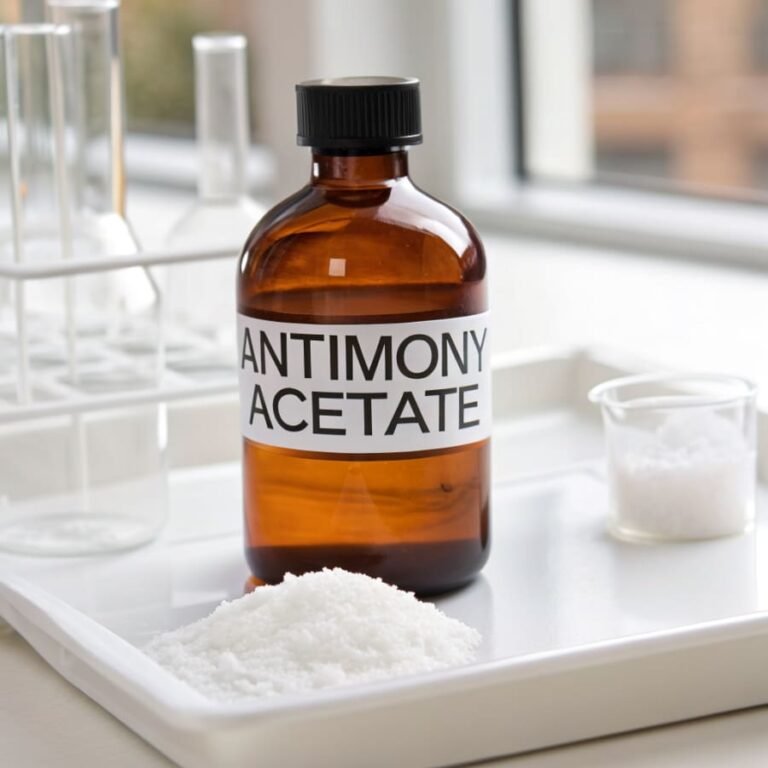
Antimony Acetate (CAS 6923-52-0) is a key antimony(III) compound used as a high-solubility polycondensation catalyst for PET polyester production. Compared with conventional antimony trioxide, it dissolves readily in ethylene glycol, accelerates polymerization, and improves the brightness and colour uniformity of the finished polymer.
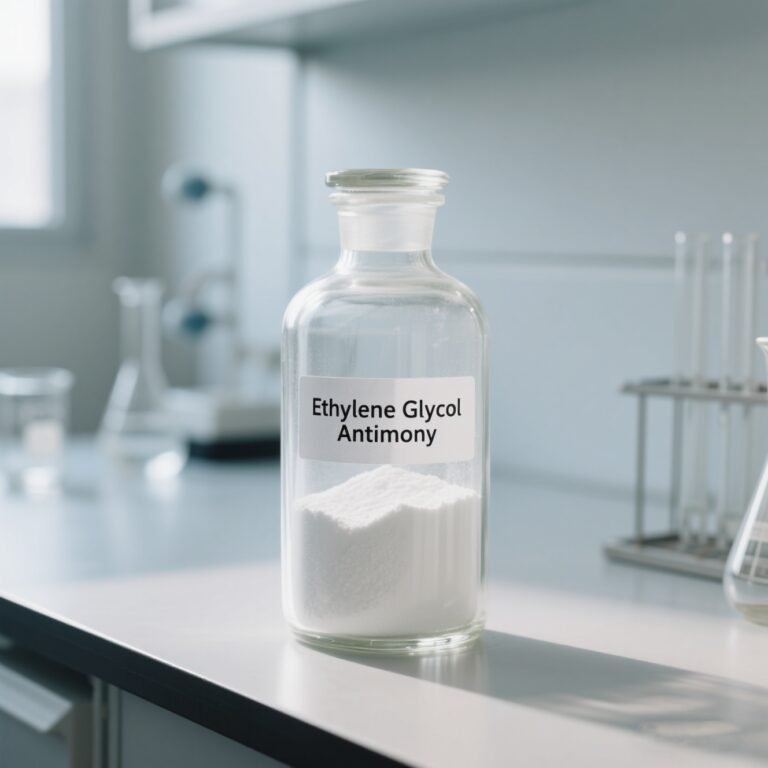
Also known as Antimony(III) Triacetate (Sb(CH₃COO)₃), Antimony Acetate is supplied as a white to off-white crystalline powder. Its superior solubility in ethylene glycol — relative to antimony trioxide — makes it the catalyst of choice for high-clarity, high-throughput PET resin lines, optical thin films, and emerging vapor-deposition applications.
Key Features
Excellent solubility in ethylene glycol, toluene and xylene
Higher polymerization activity than Sb₂O₃ in PET production
Improves polymer brightness and reduces color deviation (Δb)
Extends sand-cup and filter service life vs trioxide-based systems
Precursor for advanced antimony thin films via CVD / sol-gel ALD
Applications
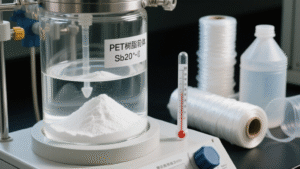
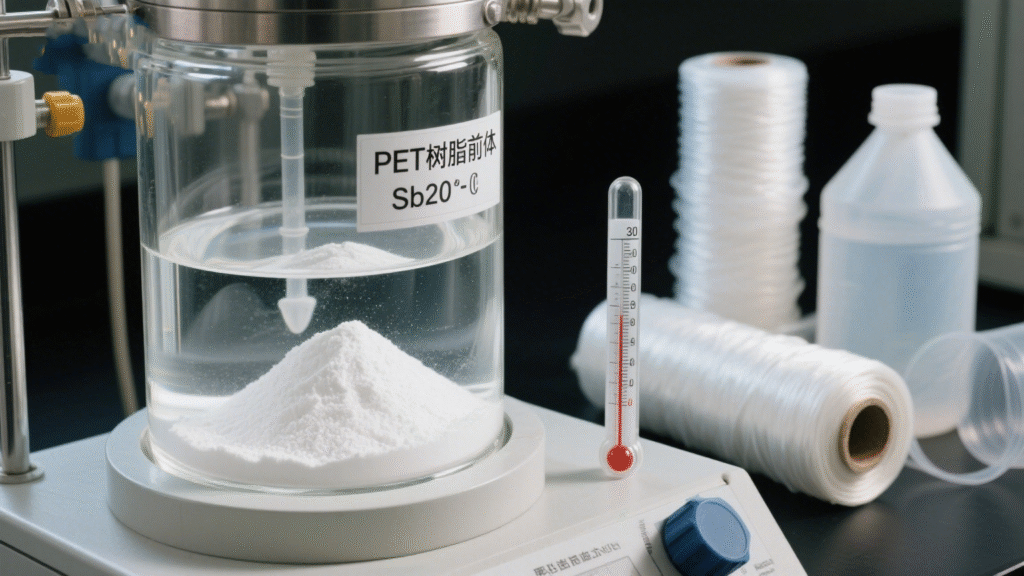
PET Polyester Catalysis
Primary use; replaces or supplements Sb₂O₃ in fiber, film and bottle-grade PET production lines.
Antimony Thin Film Precursor
Precursor in CVD and ALD processes for photovoltaic and photodetector device fabrication.
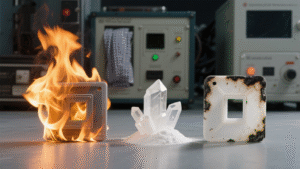
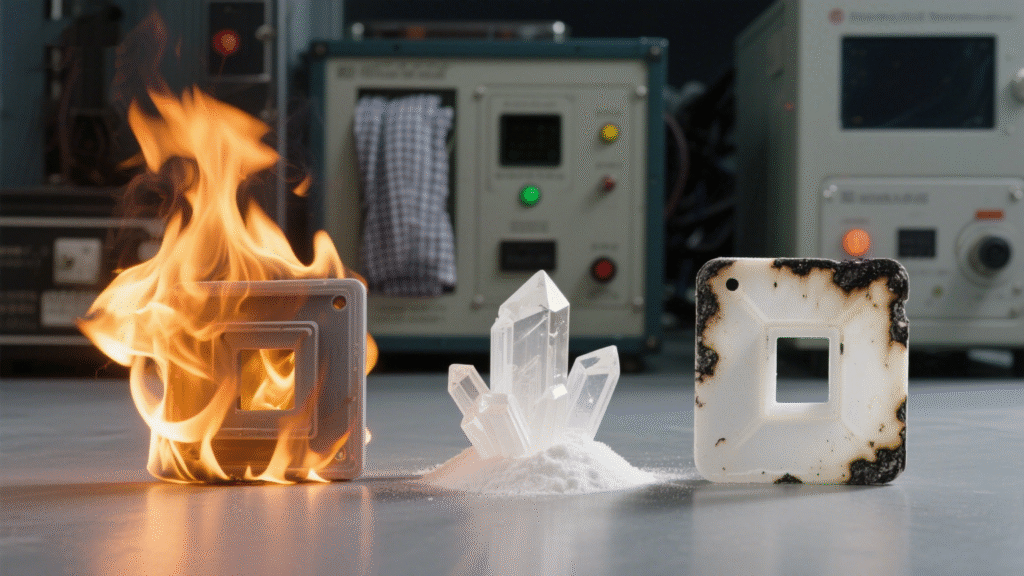
Flame Retardant Synergist
Improves fire resistance in specialty polymer formulations combined with halogen-based FR systems.
Pigment & Electronics Additive
Supporting role in pigment dispersions, antimicrobial preservatives, and electronic materials.
PET Polyester Catalysis
Primary use; replaces or supplements Sb₂O₃ in fiber, film and bottle-grade PET production lines.
Antimony Thin Film Precursor
Precursor in CVD and ALD processes for photovoltaic and photodetector device fabrication.
Flame Retardant Synergist
Improves fire resistance in specialty polymer formulations combined with halogen-based FR systems.
Pigment & Electronics Additive
Supporting role in pigment dispersions, antimicrobial preservatives, and electronic materials.
Packaging specifications
Vacuum-sealed in aluminium-plastic composite bags, 25 kg per bag, 1 tote per metric ton. Custom packaging available on request. Store sealed in a cool, dry, shaded environment — sensitive to moisture.
Parameter indicators
Category
Index Details
Value 1
Value 2
Chemical Components (%)
Sb₂O₃ ≤
99.80
99.80
Impurity content ≤
As
0.0100
0.0450
Pb
0.0100
0.0740
Fe
0.0035
0.0035
Cu
0.0020
0.0020
Se
0.0040
0.0040
Bi
0.0020
0.0020
Cd
0.0041
0.0010
Physical Property
Average radius /μm ≤
1
1
White sheen ≤
96
95
FAQs for Antimony Acetate
Why use Antimony Acetate instead of Antimony Trioxide for PET?
Antimony acetate is highly soluble in ethylene glycol, which accelerates polymerization and produces brighter PET with smaller batch-to-batch hue deviation. It also extends the service life of sand cups and filters by reducing insoluble Sb residue.
Is Antimony Acetate hazardous to handle?
It is classified as corrosive, harmful and environmentally hazardous. Use chemical-resistant gloves and goggles, handle in a fume hood, and follow our SDS for storage and disposal procedures. We ship the latest SDS with every order.
Can you supply ALD / CVD grade material?
Yes. We offer 99.99% trace-metals grade Antimony Acetate suitable for atomic-layer deposition, chemical vapor deposition and sol-gel processes for photovoltaic and photodetector applications.