
Why More PET Factories Switch from Antimony Acetate to ATG Catalyst
Why More PET Factories Switch from Antimony Acetate to ATG Catalyst For PET and polyester producers, catalyst selection is no longer a small raw-material decision. It affects esterification stability, polycondensation rate, color tone, acetaldehyde formation, chip quality, filter life, maintenance frequency, and ultimately the cost per ton of polymer. As PET plants run larger continuous […]
Ethylene Glycol Antimony (ATG): High Performance Catalyst for PET Polycondensation
Ethylene Glycol Antimony (ATG): High Performance Catalyst for PET Polycondensation PET producers are under constant pressure to increase throughput, reduce color drift, control acetaldehyde, and maintain stable intrinsic viscosity while processing larger volumes of bottle-grade, film-grade, fiber-grade, and engineering polyester resin. In continuous PET lines, even small variations in catalyst purity, solubility, dosing stability, and […]
Consistent Particle Size Sodium Antimonate From China Factory Haihui
Consistent Particle Size Sodium Antimonate From China Factory Haihui For glass, ceramics, flame-retardant plastics, and specialty chemical applications, sodium antimonate is often evaluated first by purity. In production, however, particle size consistency can be just as important. A narrow and repeatable particle size distribution helps reduce batch-to-batch variation in dispersion, filtration behavior, melting response, opacity, […]
Solve PET Yellowing Problems with High Purity Antimony Glycolate Catalyst
Solve PET Yellowing Problems with High Purity Antimony Glycolate Catalyst PET producers are under constant pressure to deliver resin with stable intrinsic viscosity, low acetaldehyde, clean melt behavior, and a bright, neutral appearance. For bottle-grade, film-grade, fiber-grade, and engineering PET, even a small shift in color can create downstream complaints: bottle preforms look dull, polyester […]
Main Applications of Sodium Pyroantimonate in the Photovoltaic Industry
Main Applications of Sodium Pyroantimonate in the Photovoltaic Industry Photovoltaic module manufacturers face a narrow technical window: front glass must deliver high solar transmittance, low haze, stable mechanical strength, long-term weatherability, and consistent optical appearance across millions of square meters. A small change in bubble content, iron color, batch melting behavior, or surface defect rate […]
Core Advantages of Antimony Ethylene Glycolate vs Antimony Acetate & Antimony Trioxide
Core Advantages of Antimony Ethylene Glycolate vs Antimony Acetate & Antimony Trioxide PET and polyester producers are under constant pressure to improve reaction efficiency, color stability, filtration performance, and downstream processing consistency while keeping catalyst cost and regulatory risk under control. In continuous polyester lines, small differences in catalyst solubility, by-product formation, ash residue, and […]
Ethylene Glycol Antimony in PET Bottle Production: Technical Specifications & Best Practices
Ethylene Glycol Antimony in PET Bottle Production: Technical Specifications & Best Practices PET bottle producers operate under tight pressure: faster solid-state polycondensation cycles, lower acetaldehyde targets, stable IV, clear bottle appearance, and consistent food-contact performance. In this environment, catalyst selection is not a small formulation detail. Ethylene glycol antimony, commonly known as EGSb, remains one […]
Top 10 Industries That Rely on Antimony Trioxide: An In-Depth Analysis
Top 10 Industries That Rely on Antimony Trioxide: An In-Depth Analysis As manufacturers face tighter fire safety rules, higher product purity expectations, and more demanding procurement audits, antimony trioxide continues to occupy a critical position in industrial formulations. Its value is not only in one headline function. Across flame retardants, glass, ceramics, polyester, catalysts, and […]
The Complete Guide to Ethylene Glycol Antimony: Properties, Benefits & Industrial Applications
The polyester and polyurethane manufacturing sectors face persistent challenges in achieving optimal catalyst performance while maintaining cost efficiency and regulatory compliance. Traditional antimony catalysts often require careful handling, present environmental concerns, and struggle to deliver consistent results across diverse production environments. As industry demands for faster polymerization, higher yields, and stricter quality control intensify, manufacturers […]
Sodium Pyroantimonate: The Secret to Clear Glass and Flawless Ceramics
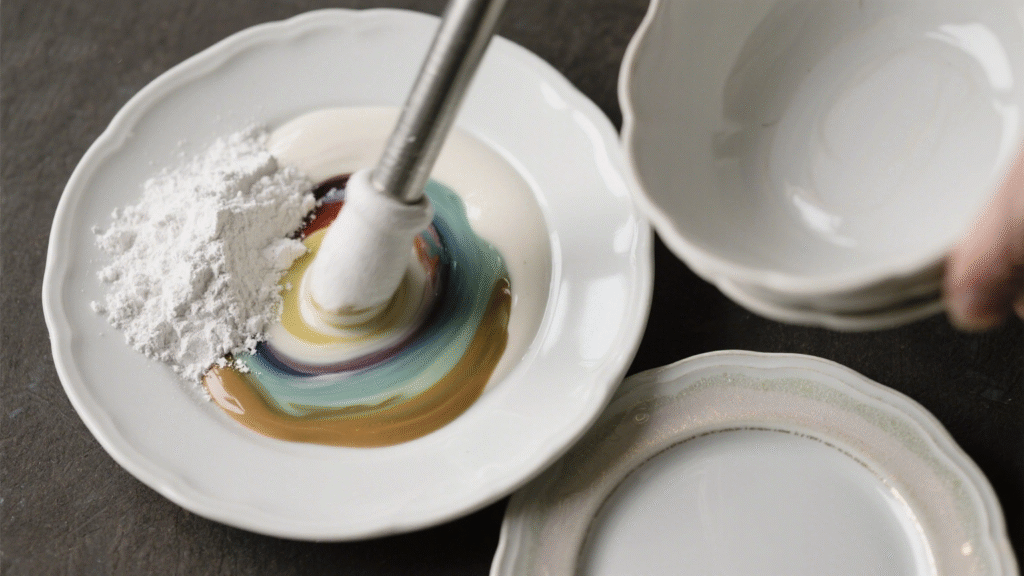
In the world of materials science, certain compounds work behind the scenes to transform ordinary raw materials into high-quality products. Sodium pyroantimonate (Na₂H₂Sb₂O₇·5H₂O) is one such unsung hero, playing a crucial role in creating the clear glass we use daily and the flawless ceramics that adorn our homes. Let’s explore the properties, applications, and manufacturing […]