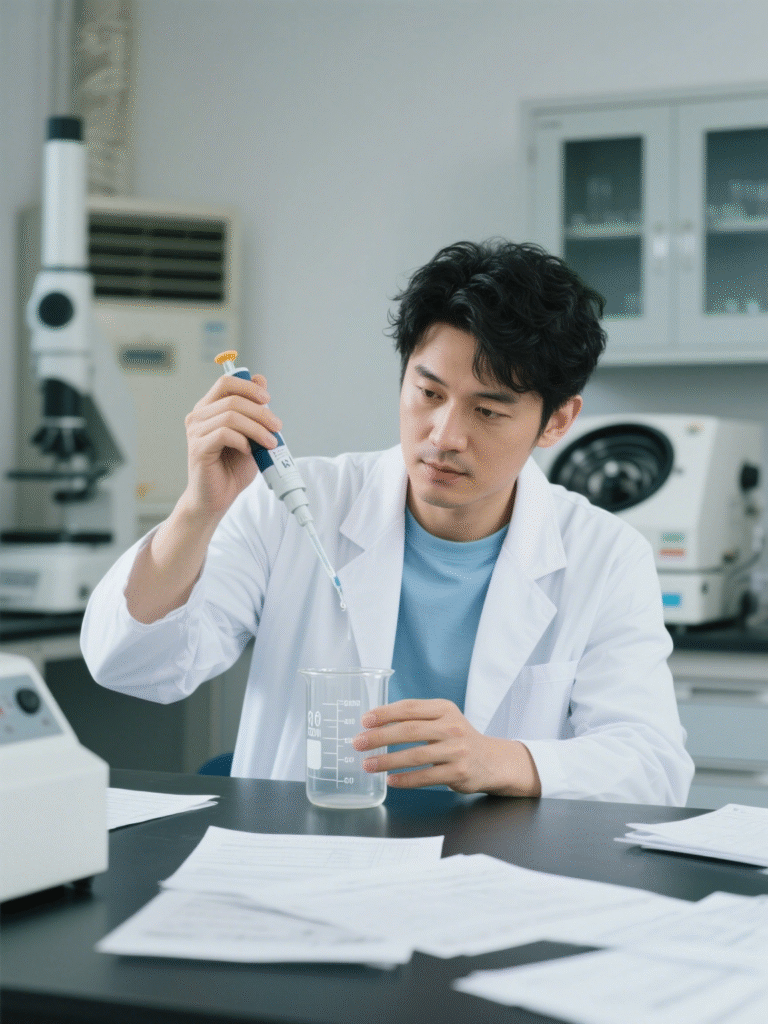
Core Advantages of Antimony Ethylene Glycolate vs Antimony Acetate & Antimony Trioxide
PET and polyester producers are under constant pressure to improve reaction efficiency, color stability, filtration performance, and downstream processing consistency while keeping catalyst cost and regulatory risk under control. In continuous polyester lines, small differences in catalyst solubility, by-product formation, ash residue, and dispersion can directly affect intrinsic viscosity, diethylene glycol content, acetaldehyde generation, chip color, fiber spinning stability, and bottle-grade clarity.
Antimony compounds remain widely used as polycondensation catalysts because they deliver reliable activity, broad process tolerance, and proven compatibility with large-scale PET production. Among the main options, antimony ethylene glycolate, antimony acetate, and antimony trioxide each provide antimony as the catalytic center, but their behavior in ethylene glycol systems is very different. Understanding the core advantages of antimony ethylene glycolate vs antimony acetate & antimony trioxide helps engineers and procurement managers select a catalyst that supports both production stability and finished-product quality.
How the Three Antimony Catalysts Behave in PET Production
Antimony Ethylene Glycolate: Designed for Ethylene Glycol Systems
Antimony ethylene glycolate, often called EGSb or antimony glycolate, is an organo-antimony compound with high compatibility in ethylene glycol. In PET production, this is a practical advantage because ethylene glycol is already a main reactant. The catalyst can be introduced as a uniform glycol solution or slurry, supporting consistent metering and rapid distribution in esterification or pre-polycondensation stages.
Typical antimony content for commercial antimony ethylene glycolate is about 54-57%, depending on product grade and moisture control. Although this is lower than antimony trioxide on a pure antimony basis, the higher process availability and better dispersion often make dosing more predictable. In many PET systems, antimony ethylene glycolate is selected where low haze, stable color, and reduced undissolved residue are important.
Antimony Acetate: Reactive but Acid-Forming
Antimony acetate is also soluble or dispersible in glycol systems and has historically been used in PET catalysis. Its antimony content is typically around 40-41%, based on Sb(OAc)3 chemistry. It can provide good catalytic activity, but the acetate group introduces acetic acid or acetate-related species into the reaction environment. This may influence acidity, side reactions, odor, corrosion considerations, and process balance.
For some polyester producers, antimony acetate remains acceptable where process conditions are well established. However, when the objective is to minimize volatile acid by-products and maintain tight control over color and acetaldehyde, antimony ethylene glycolate often offers a cleaner route.
Antimony Trioxide: High Antimony Content, Lower Solubility
Antimony trioxide, Sb2O3, contains approximately 83.5% antimony and is widely used in flame retardants, glass, ceramics, and polyester applications. In PET catalysis, its main limitation is not antimony concentration but dispersion and solubility. Sb2O3 is an inorganic oxide and must dissolve or react sufficiently in the glycol-rich process environment before it becomes catalytically effective.
Undissolved antimony trioxide particles can contribute to filter pressure rise, haze, specks, and inconsistent catalyst availability. The performance depends heavily on particle size, purity, crystal form, slurry preparation, and residence time. For fiber-grade and bottle-grade PET, where optical clarity and filtration stability are critical, these factors can become production constraints.
Technical Comparison: Core Advantages of Antimony Ethylene Glycolate
The most important difference between these catalysts is not simply antimony percentage. It is how efficiently and cleanly the antimony becomes available in the polyester reaction mass. In this respect, antimony ethylene glycolate provides several advantages over antimony acetate and antimony trioxide.
| Parameter | Antimony Ethylene Glycolate | Antimony Acetate | Antimony Trioxide |
|---|---|---|---|
| Typical Sb content | About 54-57% | About 40-41% | About 83.5% |
| Compatibility with ethylene glycol | High; designed for EG systems | Good, but acetate chemistry introduces acid species | Low direct solubility; requires good dispersion and reaction time |
| Catalyst availability | Fast and uniform distribution | Good activity, process dependent | Dependent on particle size and dissolution behavior |
| By-product concern | Low; glycolate ligand is process-compatible | Acetic acid or acetate-related volatiles | No organic acid, but undissolved residue may remain |
| Effect on PET clarity | Favorable for low haze and fewer black specks | Can be good when controlled | Higher risk if particles are not fully dispersed |
| Typical application fit | Bottle-grade PET, film, fiber, high-clarity polyester | General PET catalysis where acidity is controlled | Cost-sensitive systems and applications tolerant of oxide dispersion limits |
| Key procurement focus | Sb assay, moisture, glycol solubility, heavy metals, particle residue | Sb assay, acetate purity, acidity, moisture | Sb2O3 purity, particle size distribution, whiteness, arsenic/lead control |
Better Solubility and More Uniform Catalysis
Polyester production is sensitive to the timing and uniformity of catalyst activation. Antimony ethylene glycolate has a structural advantage because it is already associated with ethylene glycol chemistry. This supports faster incorporation into the reaction phase, reducing the risk of localized high-catalyst zones or poorly catalyzed regions.
In continuous PET units, uniform catalyst distribution helps stabilize polycondensation rate, intrinsic viscosity build-up, and terminal carboxyl group control. Producers commonly monitor intrinsic viscosity using methods aligned with ASTM D4603 or equivalent internal methods. A more uniform catalyst feed can help reduce batch-to-batch or line-to-line variation in IV, especially when polymer grades require narrow specifications.
Lower Risk of Filter Pressure Rise and Haze
Undissolved inorganic material is a common concern in polyester melt filtration. Antimony trioxide can perform well when properly prepared, but it depends on fine particle size, high purity, and sufficient reaction time. If dispersion is incomplete, particles may contribute to filter loading, spinneret contamination, or optical defects in PET film and bottle resin.
Antimony ethylene glycolate reduces this risk because it is more compatible with the glycol phase and does not rely on oxide particle dissolution to the same extent. For applications evaluated by haze and transmittance methods such as ASTM D1003, catalyst-related clarity improvements can be commercially important. Bottle-grade PET, high-brightness fibers, and optical films all benefit from lower particulate residue and more stable melt filtration.
Cleaner By-Product Profile Than Antimony Acetate
Antimony acetate provides active antimony, but the acetate ligand can generate acetic acid or acetate-related species under polyester process conditions. This matters because PET producers already manage volatile organic compounds, aldehydes, and process acidity. Excess acid species can affect side reactions, equipment corrosion considerations, and odor control.
Antimony ethylene glycolate avoids this acetate-related burden. Its glycolate chemistry is more aligned with the PET reaction environment, making it attractive for producers seeking low volatile acid contribution and more stable color. This is particularly relevant where acetaldehyde content, color b value, and thermal stability are key quality indicators.
Impact on Product Quality, Standards, and Downstream Performance
Color Stability and Optical Quality
In PET, catalyst choice can influence color through metal purity, degradation behavior, and side reactions. A high-quality antimony ethylene glycolate catalyst should have controlled heavy metals such as iron, lead, arsenic, and other impurities that can affect color and thermal stability. Producers often track chip color using CIE L*a*b* values, where higher L value and lower b value are generally preferred for bright, low-yellow polyester.
For bottle-grade and film-grade PET, optical performance may be tested under ASTM D1003 for haze and luminous transmittance. For fiber applications, spinneret life, filament break rate, and dyeing consistency are practical indicators. Antimony ethylene glycolate helps by reducing undissolved residue and improving catalyst uniformity, which can translate into fewer gels, specks, and filtration interruptions.
Process Efficiency and IV Control
The catalytic efficiency of antimony ethylene glycolate supports stable polycondensation at typical PET processing temperatures. In commercial operations, the catalyst must help achieve target intrinsic viscosity without excessive residence time or overheating. Excessive thermal exposure can increase degradation, acetaldehyde formation, and color drift.
Antimony trioxide can deliver strong catalytic performance after activation, but its oxide form makes preparation more important. Antimony acetate can be active but may require tighter control of acid balance. Antimony ethylene glycolate provides a practical middle ground: strong antimony activity, good EG compatibility, and fewer process complications related to insoluble particles or acetate by-products.
Regulatory and Quality Management Considerations
For procurement teams, catalyst selection is not only a chemistry decision. It also involves supplier quality systems, traceability, environmental management, and consistent documentation. ISO 9001 supports quality management discipline, while ISO 14001 reflects environmental management practices. These standards do not replace product testing, but they help reduce supply-chain risk when purchasing technical chemicals for continuous production.
Depending on the final polyester application, downstream compliance may also involve food-contact regulations, customer-specific restricted substance lists, or flame-retardant performance frameworks. In flame-retardant plastics, UL 94 is commonly used to classify burning behavior, although PET catalyst selection itself is not a UL 94 rating. The key point is that catalyst purity and antimony residue control must fit the downstream application and the customer’s compliance package.
Procurement and Engineering Criteria for Selecting EGSb
Recommended Technical Checks
When evaluating antimony ethylene glycolate against antimony acetate or antimony trioxide, buyers should request a complete certificate of analysis and confirm that the specification aligns with the plant’s process window. Important parameters include antimony assay, moisture, glycol solubility, pH or acidity indicators, heavy metals, appearance, and insoluble matter.
- Antimony content: typically controlled around 54-57% for EGSb, depending on grade.
- Moisture: low and consistent moisture supports stable dosing and minimizes side reactions.
- Insoluble matter: important for melt filtration, film clarity, and fiber spinning stability.
- Heavy metals: iron, arsenic, lead, and other impurities should be tightly controlled.
- Batch consistency: critical for continuous PET lines and large-volume procurement.
- Packaging: moisture-resistant packaging helps maintain catalyst quality during storage and transport.
When Antimony Ethylene Glycolate Is the Better Choice
Antimony ethylene glycolate is usually the preferred option when the production priority is stable catalyst feeding, low haze, fewer particulate defects, and a cleaner reaction environment. It is especially suitable for bottle-grade PET, polyester film, high-quality fiber, and other applications where product appearance and processing stability carry direct economic value.
Antimony acetate may still be selected where legacy process recipes are optimized around it and acid-related effects are under control. Antimony trioxide may remain attractive in applications where high antimony content and cost per unit of antimony are the dominant considerations. However, when total operating cost is evaluated, including filtration life, off-spec resin, color correction, and line stability, antimony ethylene glycolate can provide a stronger technical value proposition.
Supplier Capability Matters
Because PET catalyst performance depends on purity and consistency, the supplier’s manufacturing discipline is important. Luoyang Haihui New Materials Co., Ltd., founded in 2000 in Luoyang, China, has more than 25 years of experience in antimony-based materials including antimony ethylene glycolate, antimony trioxide, sodium pyroantimonate, sodium metaantimonate, and FCC passivating agents. The company operates under ISO 9001 and ISO 14001 systems and has built a technical base supported by 60 patents, including 10 invention patents.
Haihui’s experience with customers in polyester, glass, and refining sectors, including Sinopec, Xinyi Glass, Rongsheng, Tongkun, and Shenghong, is relevant because these industries require stable technical specifications rather than one-time commodity supply. For PET catalyst users, this means the discussion can focus on actual plant requirements: Sb dosage, EG preparation method, filtration target, IV range, color limits, and packaging logistics.
Conclusion: Why EGSb Offers a Stronger Balance
The core advantages of antimony ethylene glycolate vs antimony acetate & antimony trioxide come from its balanced chemistry. Compared with antimony acetate, it avoids acetate-related acid by-products and supports a cleaner PET reaction environment. Compared with antimony trioxide, it offers better compatibility with ethylene glycol, more uniform catalyst availability, and lower risk of undissolved residues affecting haze, filtration, and spinning performance.
For engineers, the value lies in stable polycondensation, predictable intrinsic viscosity control, improved optical quality, and fewer process interruptions. For procurement managers, the value lies in consistent quality, easier handling in glycol-based systems, and reduced risk of hidden costs from off-spec production or filtration instability. The best choice should always be confirmed through plant trials, but for high-quality PET, film, and fiber production, antimony ethylene glycolate is often the most technically balanced antimony catalyst.
To discuss antimony ethylene glycolate specifications, sample evaluation, PET catalyst dosage, or a comparison with your current antimony acetate or antimony trioxide system, contact Haihui Antimony. Our technical team can support your inquiry with product data, COA review, packaging options, and application-focused recommendations for your polyester production line.